
HMRC’s Latest Film & High-End TV Figures
Film and TV production claimed a combined £1.6bn in UK tax reliefs in the financial year 2024/25, according to provisional figures released by HM Revenue and Customs. This is broadly in line with the previous year.
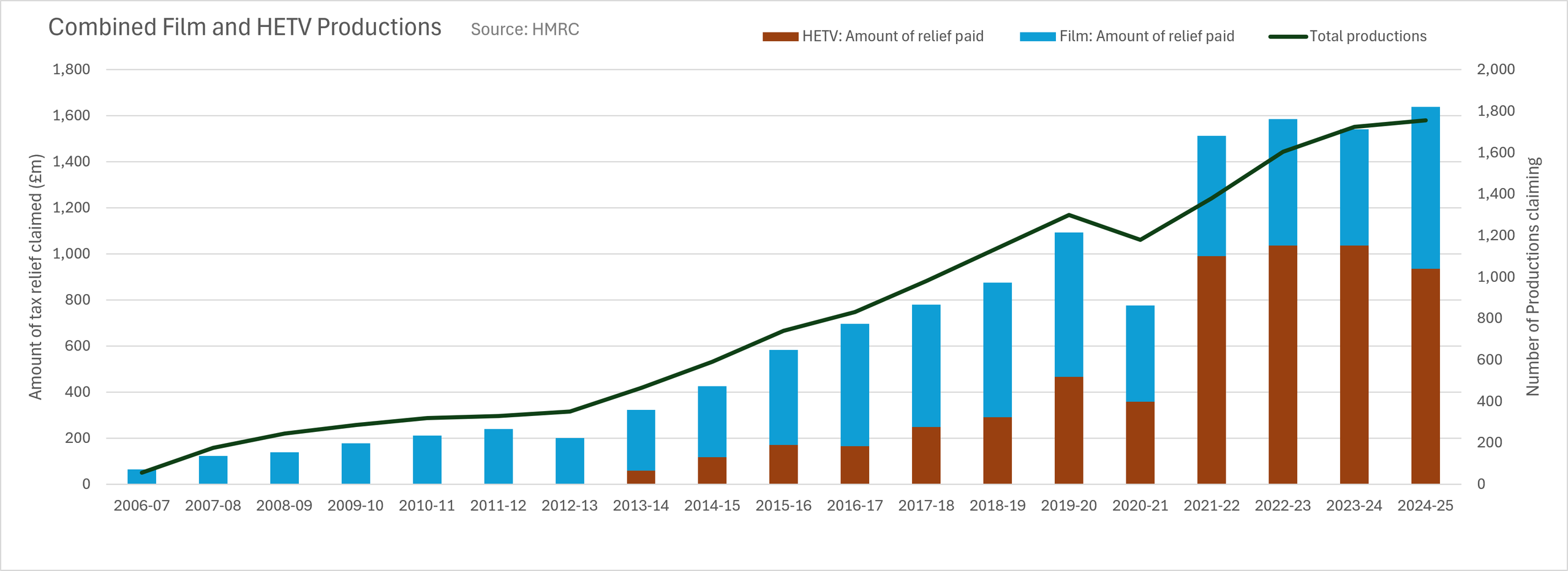
HMRC’s report provides information on tax reliefs and expenditure credit claims made for the Film, High-End Television (HETV), Animation, Children’s Television, Video Games, Theatre, Orchestra, and Museums and Galleries Exhibition Tax Reliefs.
The statistics reveal a notably different picture for film and high-end television. While the two sectors remain the largest recipients of creative industries tax relief (HETV represented 38% of the total amount paid out and Film Tax Relief – including AVEC and independent films – accounted for 29% of the total) the latest figures show strong growth in film alongside a fall in HETV relief.
The VFX uplift was implemented on April 1st 2025, so only applies to costs incurred in the last three months of the reporting year, and the requirement for a final certificate will push some claims back further still. This means that too few VFX claims have been presented so far to be reported in this release, but HMRC anticipates having enough data to report VFX relief figures in next year’s publication. UK Screen Alliance will be publishing and analysing our commissioned data on current VFX spend in the UK, growth, and GVA on 8th October 2026 at INsight ’26: The Post-Production and VFX Business Conference.
Film growth at an all-time high
Overall trend
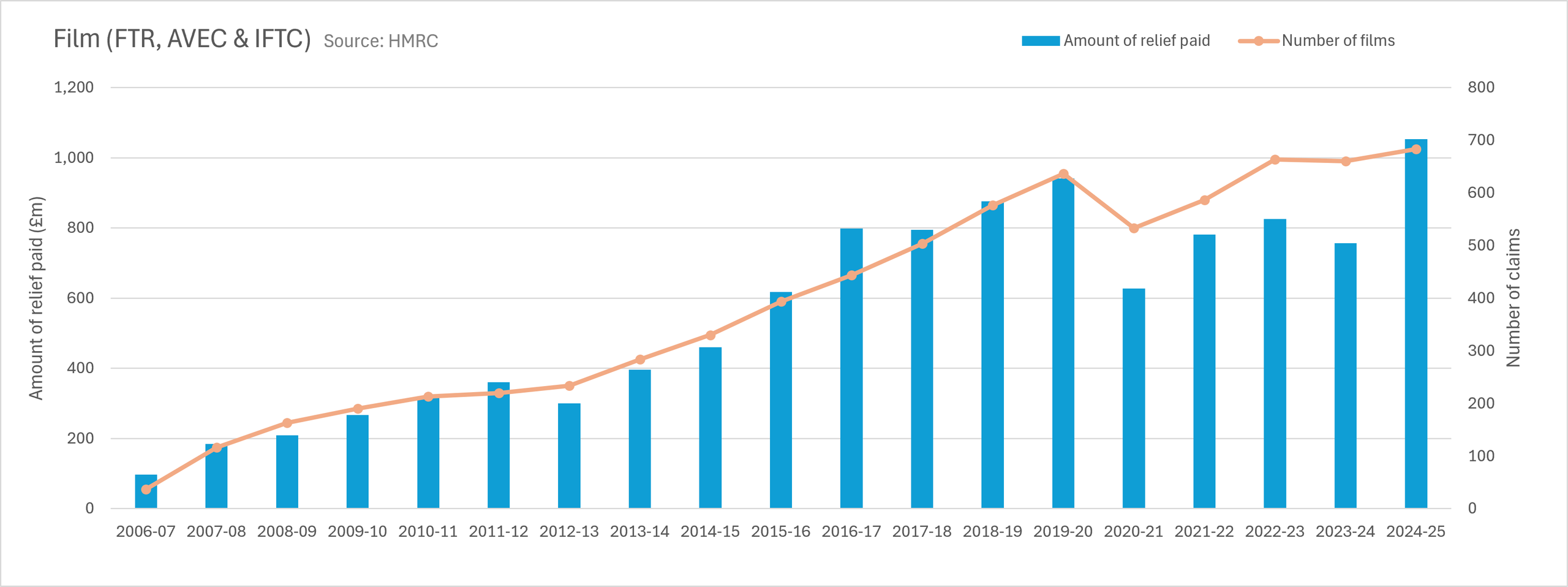
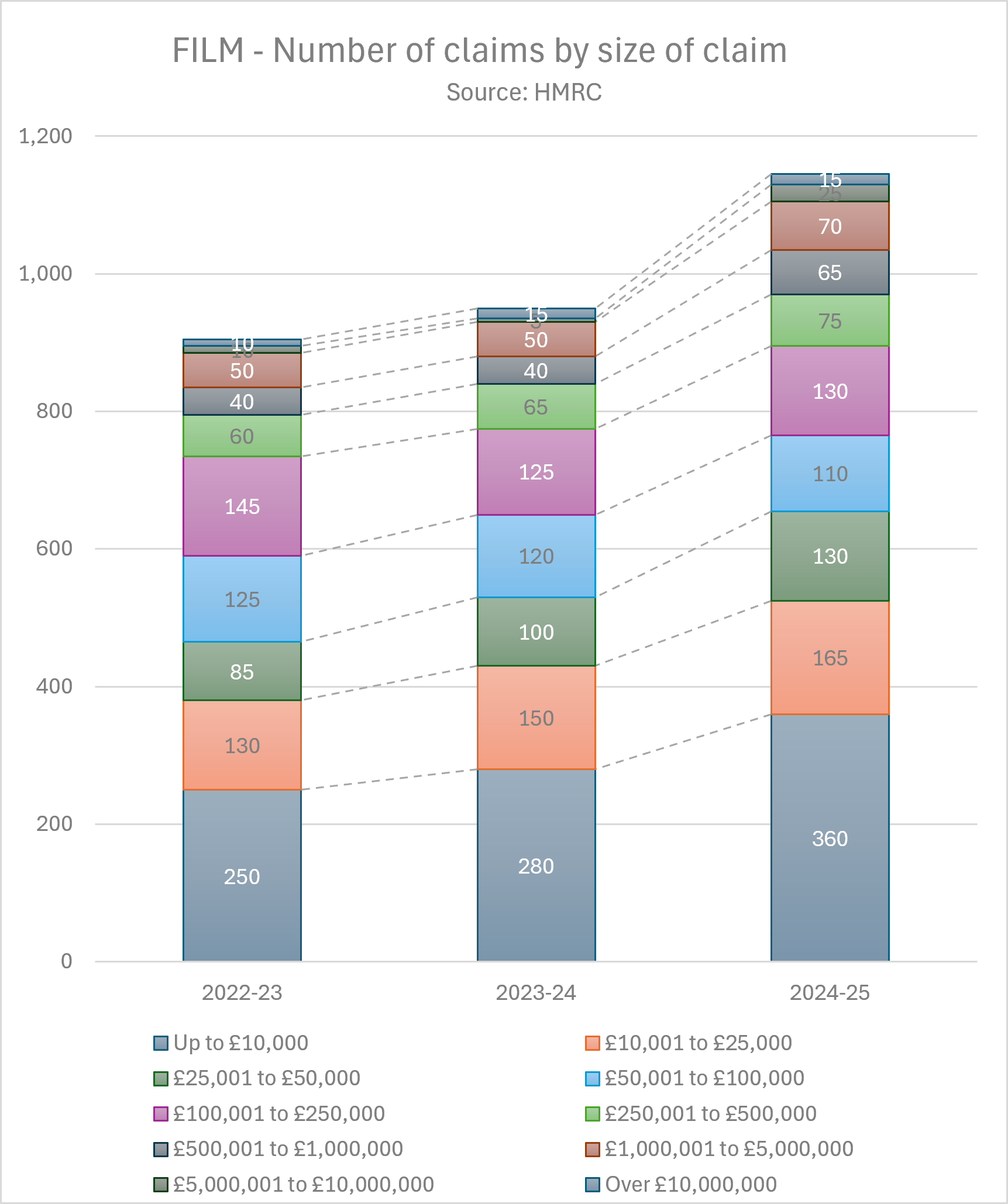
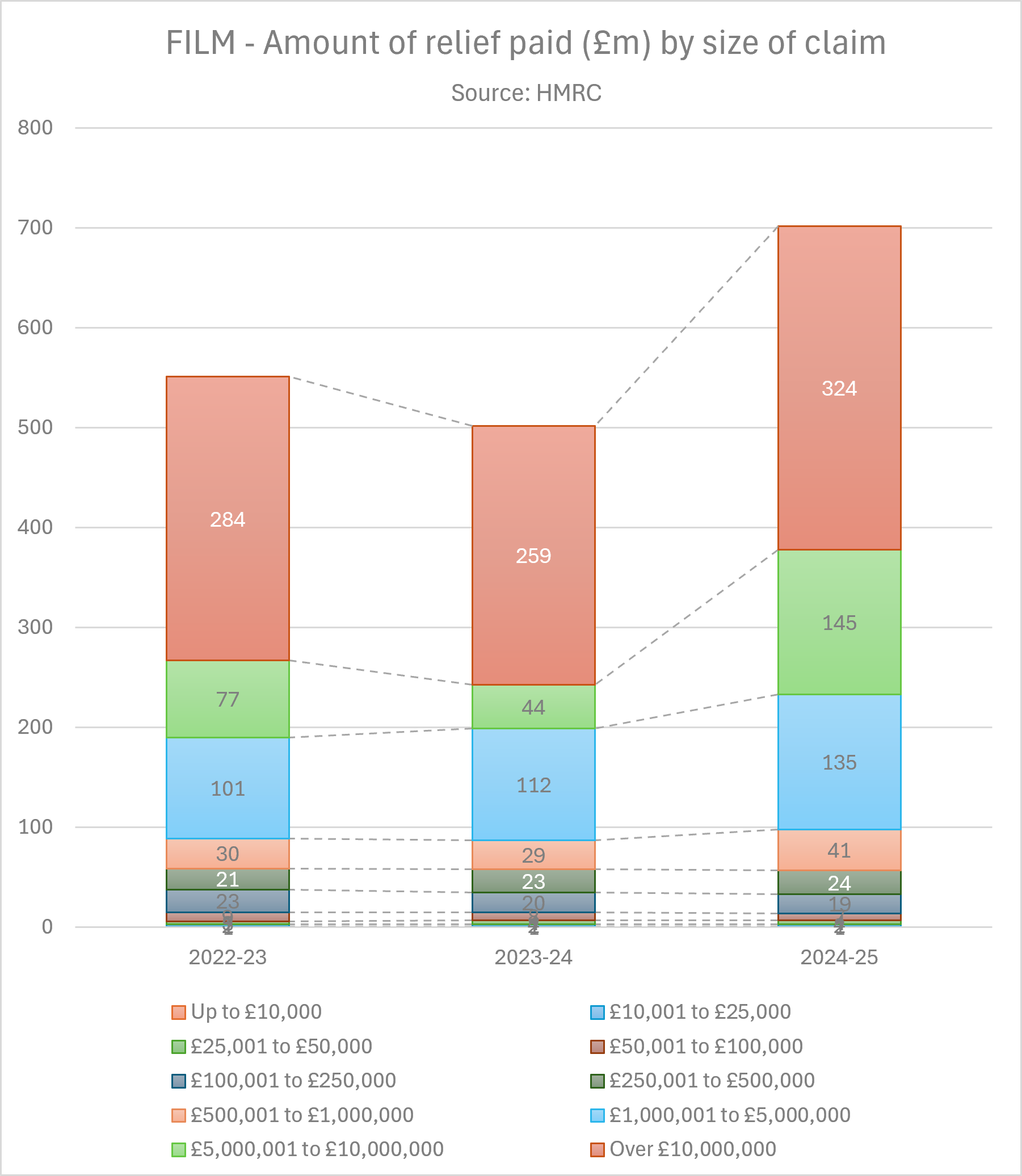
Film is the clearest area of growth in the latest figures, where the total claims for the year represent an all-time high There were 1,145 claims made for FTR, AVEC (Film) and AVEC (IFTC) in relation to the 2024 to 2025 financial year, totalling £702 million of relief paid out. This is a 39% increase in the amount of relief paid compared with the previous year, with the number of claims also up 21% year-on-year.
What’s driving it
- This increase is mainly driven by a greater amount paid out relating to high-value claims (over £5m). Only 3% of claims were over £5m, but they accounted for 67% of the total amount paid.
- Under the AVEC rules, some productions with both threatrical and TV releases that would previously have claimed as HETV, are now claiming as films.
- The new Independent Film Tax Credit is also adding to this: an estimated £57m of relief was paid in relation to 145 claims in its first year.
HETV relief falls back
Overall trend
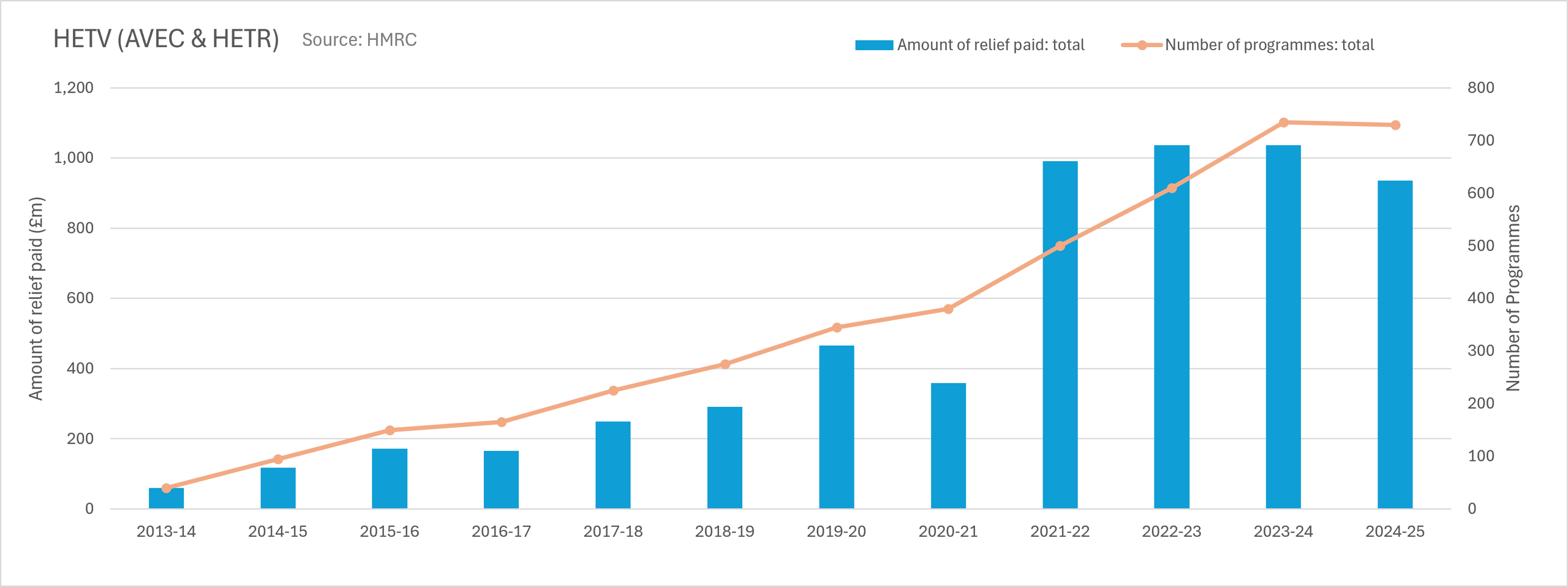
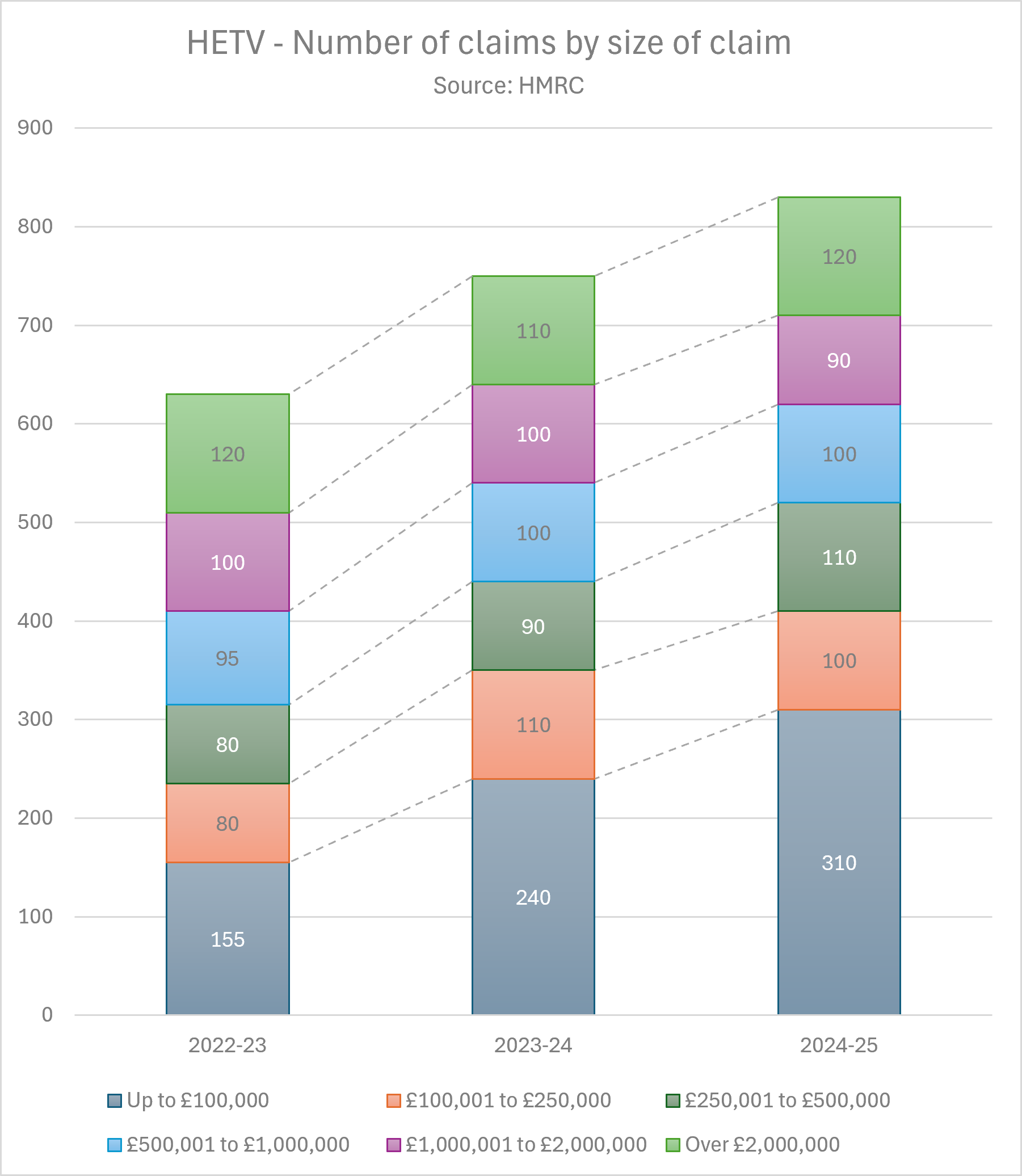
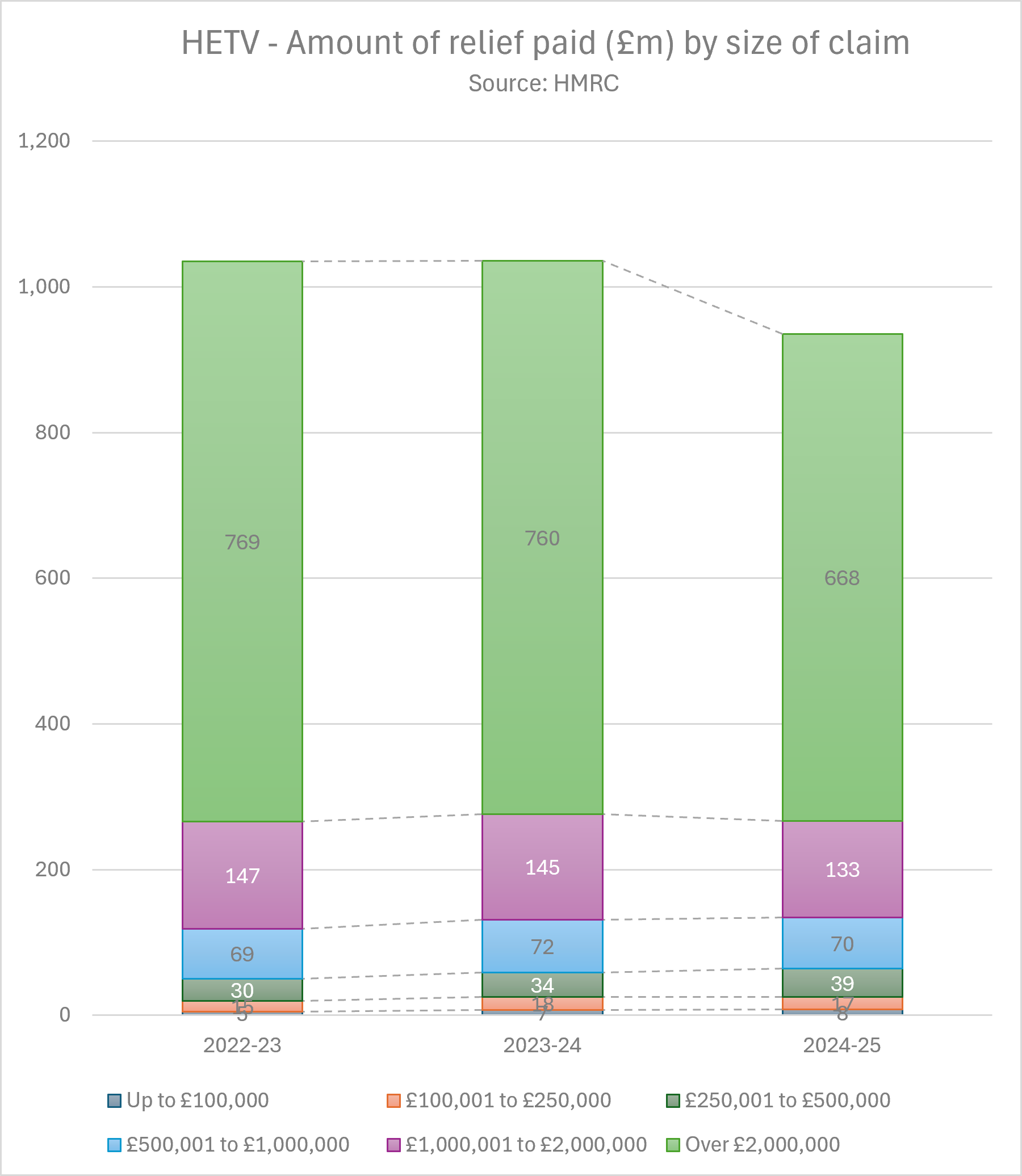
There were 830 claims made for HETV relief in relation to the 2024 to 2025 financial year, totalling £936 million of relief paid out – a 10% decrease from the previous year.
What’s driving it
- HMRC links this directly to the film trend above: some of this fall may be due to the transition to AVEC, as some feature length productions which previously claimed HETV relief will now claim as a film if they have a theatrical release. Essentially, this looks partly like a reclassification effect rather than a pure decline in production activity.
- On claim size, high-value claims (over £2 million) accounted for 71% of the total amount paid, slightly lower than the 73% figure for the previous year.
Looking Ahead
In general, HMRC’s figures point to a sector reshaping itself around the new AVEC regime. Film’s all-time high and HETV’s 10% fall are two sides of the same story: as productions migrate from the old tax reliefs to AVEC, some that would once have claimed as HETV are now being claimed as films, particularly where they have a theatrical release. The real test will come in next year’s release, when VFX-specific relief data is expected for the first time, and when a fuller year of AVEC and IFTC claims should make it clearer how much of this is redistribution between reliefs versus genuine underlying growth. In the meantime, film and TV production’s combined £1.6bn claims for 2024-25 suggests the sector’s tax relief base remains stable and resilient even as its shape continues to shift.