
Landmark North West Animation Survey highlights urgent need to treat animation as a priority sector
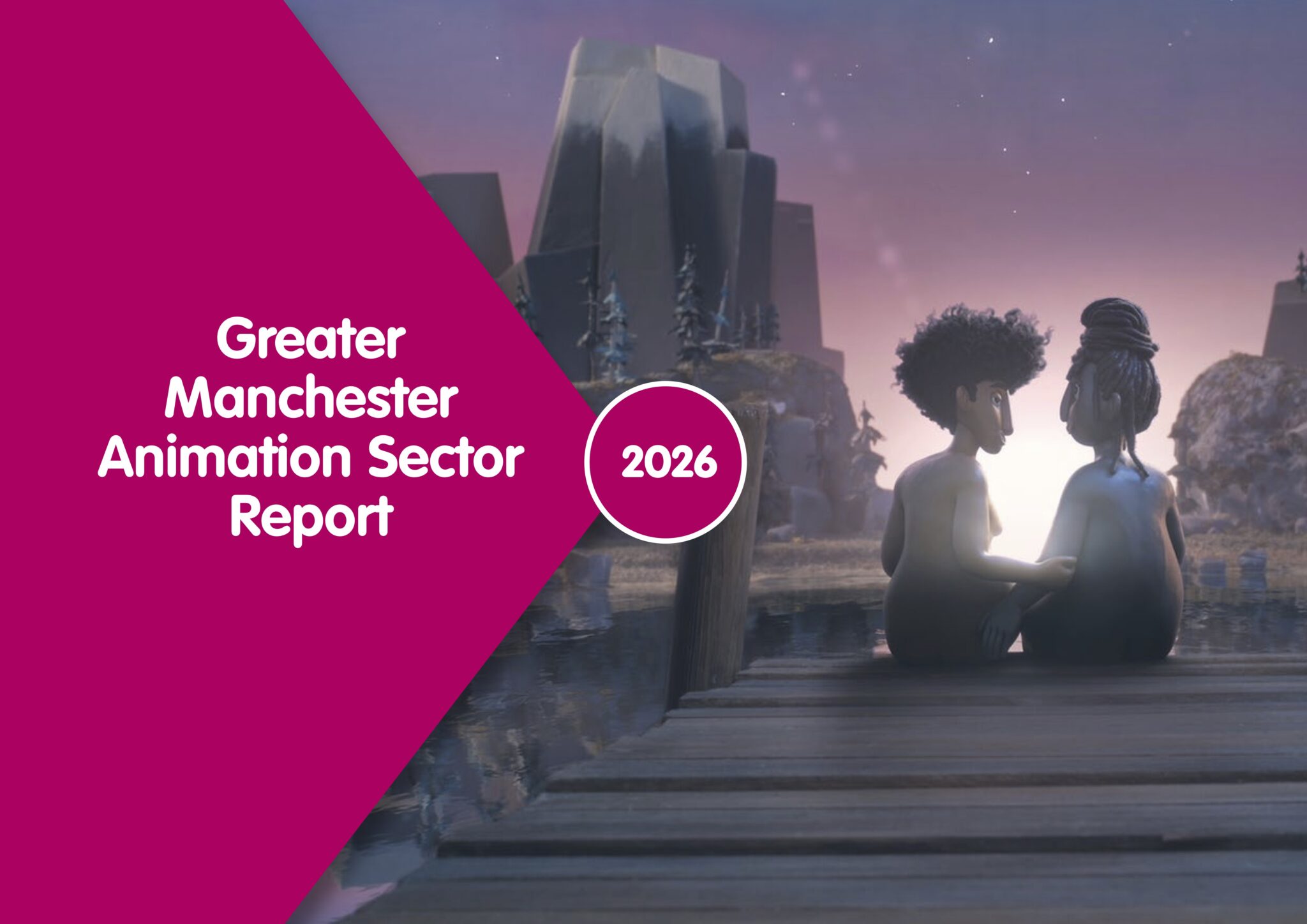
On Monday 9th March, the results of a major sector survey mapping the scale, growth and challenges of Greater Manchester’s animation, VFX, motion graphics, games cinematic and immersive media industries were published. The research was led by Manchester Animation Festival in collaboration with BBC Children’s & Education, MediaCity and the MediaCity Immersive Technologies Innovation Hub, following the launch of a landmark data‑gathering initiative in October 2025 designed to build the most comprehensive portrait to date of the region’s animation ecosystem.
The report makes compelling case for animation to be recognised as a strategic industry in its own right, rather than continuing to sit in the shadow of broader film and television policy. It presents Greater Manchester as one of the UK’s most significant animation hubs, with decades of accumulated skills, global relationships and cultural impact, but also warns that the sector is now under growing strain.
“With this regional report, Greater Manchester Combined Authority now have both the data and the unique opportunity to make real changes that benefit it’s internationally renowned collective of creatives working in the animation sector and to set to the blueprint for prosperity that the rest of the animation hubs across the UK can follow.”
Dr Steve Henderson, Festival Director at MAF and GMAS Survey Author
The findings show a region with a substantial and internationally significant animation ecosystem. Greater Manchester’s strengths extend well beyond one part of the screen sector, encompassing animation, VFX, motion graphics, XR and games-related work, supported by a recognised creative community and important industry platforms such as Manchester Animation Festival and Motion North. The report also highlights the importance of these events in supporting networking, confidence, recruitment and industry visibility.

Yet the report is equally clear that this is a sector facing real fragility. It warns that without targeted intervention, Greater Manchester’s animation industry could contract rapidly through the loss of freelance talent, erosion of skills and declining confidence in the viability of animation careers. That warning is backed by stark survey findings: 42% of freelancers said they feel less secure about their role in the industry, while 28% said they are actively seeking opportunities outside animation. Once lost, the report notes, the workforce and expertise will be extremely difficult and costly to rebuild.
The report also argues that animation is too often overlooked in policy despite offering something strategically different from much of the wider screen economy. While inward investment in film and high-end television brings jobs and short-term activity, the report notes that much of the long-term value and IP ownership can sit elsewhere. Animation, by contrast, is described as inherently IP-driven, capable of generating enduring brands, long-tail revenue and stronger local creative identity.
That distinction matters not only for Greater Manchester, but for the UK as a whole. The regional case set out here reflects a wider national problem: animation is often nominally included within the broader TV and film sector, but in practice receives far less tailored recognition and support. This is even though animation is a high-skill, high-value, innovation-led and export-facing industry, with business models and workforce structures that differ materially from live action.
The recommendations in the report are therefore significant. They call for animation to be explicitly recognised as a priority creative industry within local and regional strategies, and for any screen office, screen fund or related support mechanism to actively include animation rather than defaulting to live-action film and television. The report also recommends support for early-stage animation IP, retaining ownership within the region, tackling freelancer insecurity, and strengthening flagship events that support the wider ecosystem.
For Animation UK, this should be seen as both a regional wake-up call and a national policy signal. Greater Manchester is not an emerging cluster asking for special treatment; it is an established animation centre warning that a valuable and distinctive industry is being placed at risk by under-recognition and under-support. If this is happening in one of the UK’s leading animation regions, it should concern policymakers everywhere.
“Greater Manchester’s report shows clearly that animation is a high-value, high-skill, IP-generating sector that is too often overlooked in policy despite its cultural and economic importance. The regional picture it describes reflects a wider UK reality. If government is serious about backing the future of the screen industries, animation must be recognised as a priority sector in its own right before more skills, talent and creative capacity are lost.”
Kate O’Connor, Animation UK
Animation UK believes the implications go well beyond Greater Manchester. Across the UK, animation businesses and freelancers are under mounting pressure from weakened commissioning pipelines, fragile development routes and insufficient policy attention. The danger is that animation continues to be treated as an add-on to the wider screen sector, even though it is one of the UK’s most important indigenous creative industries — generating IP, building long-term value, developing specialist skills and contributing to both economic growth and cultural impact.