A deep-dive into the fantastic behind-the-scenes work of Midas VFX on Prime Video’s new series
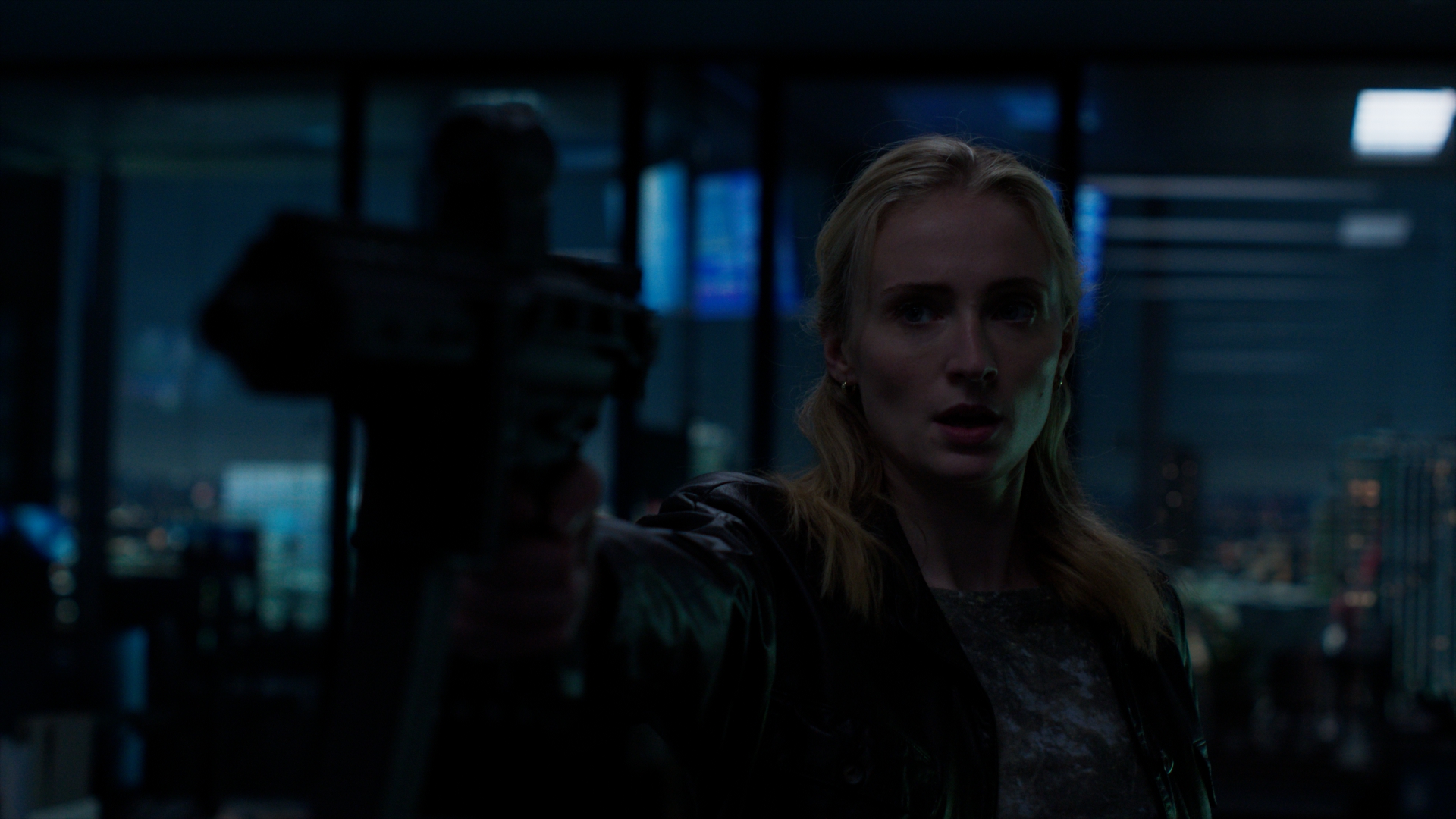
Having premiered on Prime Video on 21 January 2026, the six-episode thriller, Steal, is set in London and stars Sophie Turner, Archie Madekwe, and Jacob Fortune-Lloyd, following an office worker who is drawn into a major financial theft that quickly escalates, with far-reaching consequences.
As the sole VFX vendor working closely with Drama Republic and Prime Video, the team at Midas VFX completed over 479 shots across all episodes.
“We came on board early in the project, building on our previous collaboration with producer Nuala O’Leary on Who is Erin Carter. With the team’s expertise in CG environments, crowds, vehicles, and action heavy sequences, early involvement allowed us to plan the VFX efficiently and ensure a smooth post-production. We tasked Adam Hopper with Supervising this one, having come off Day of the Jackal with similar scope of work it was a natural fit”
Marc Hutchings, Head of VFX at Midas VFX
The VFX in Steal are intentionally subtle and largely invisible. Enhancing what was filmed or providing solutions where practical shooting wasn’t possible, so the story and tension can unfold naturally without drawing attention to the effects.
Adam Hopper breaks down the VFX team’s approach behind the Steal production
Pre-production to Production
VFX supervision was planned according to script and storyboarded only where needed – this was predominantly for the opening episode to establish the location among the iconic buildings of London. These scenes were filmed partly in the Scalpel building on Lime Street and partly in Sky’s Elstree studios, where the open office space and reception was built to match the floor plan of the Scalpel office.
At the studio, a translight was created for the window exteriors, delivering a seamless transition between location and studio footage. For the night sequences, subtle VFX enhancements were added to bring the world to life, with flashing building lights, passing planes and helicopters, and selective enhancement of
window lights.
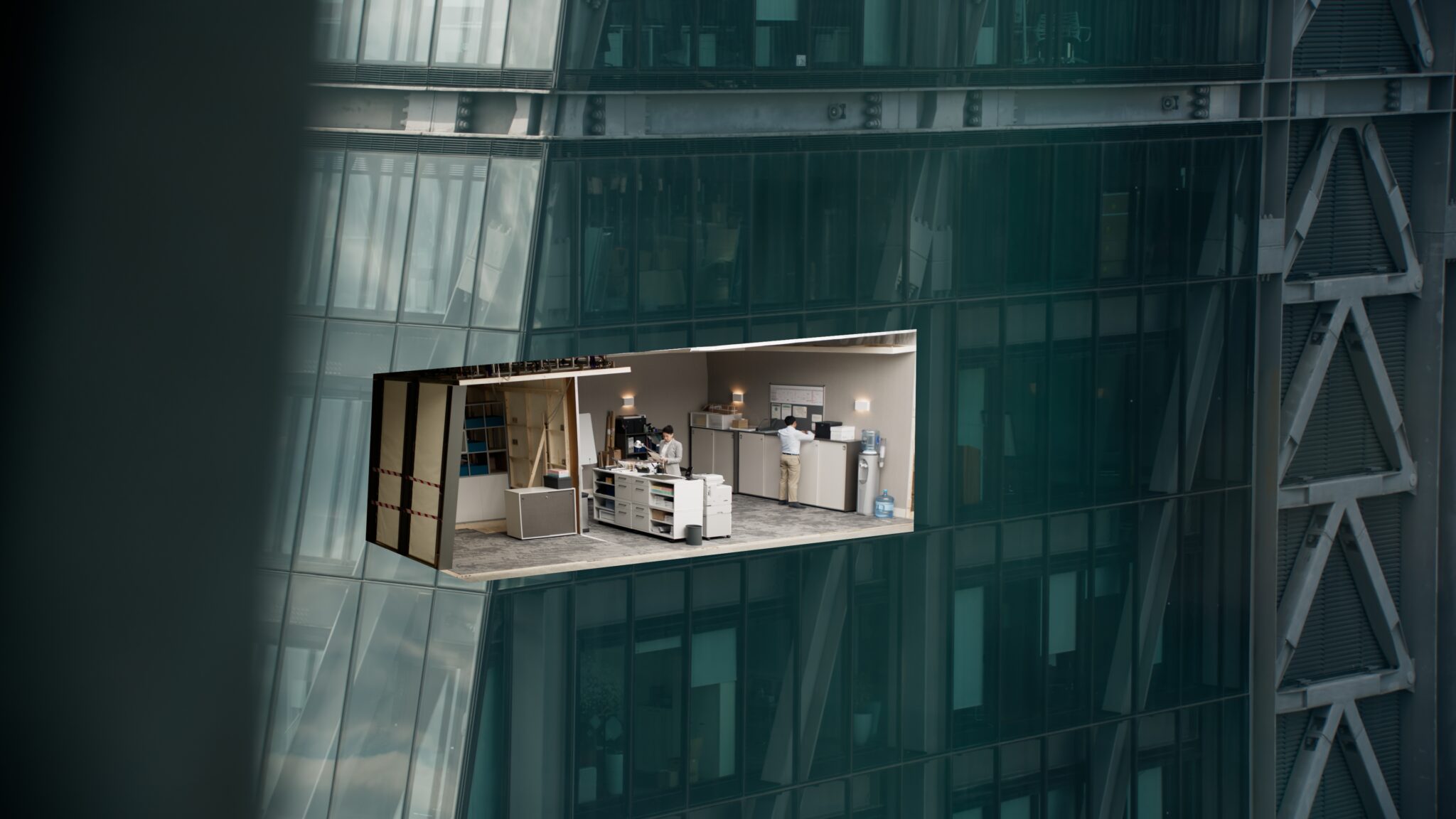
A scene that depended on VFX was when Donnie signalled towards the Leadenhall building for help: the POV shots of the Leadenhall building were first captured from the Scalpel location and the rest was filmed at the studio. As there was no access to the Leadenhall building for set dressing or actors, an interior layout was built at Elstree matching the dimensions of the exact office room filmed from the scalpel.
On set, Midas then used Qtake to overlay the Leadenhall shot and worked closely with the camera department to get the correct perspective on the interior, which was then seamlessly composited into the main building shot.
The reverse POV (from Leadenhall to the Scalpel building), was slightly more of a challenge. Shooting from the Leadenhall building was ruled out, firstly as there was no access, and secondly as the building has a secondary glass curtain which might have obscured the shot. Multiple attempts were then made to use a drone, however due to signal blockage, flight restrictions and solar flares, they weren’t able to clear the first floor.
It became clear at this stage that this shot would require a full CG solution.
CG Solutions
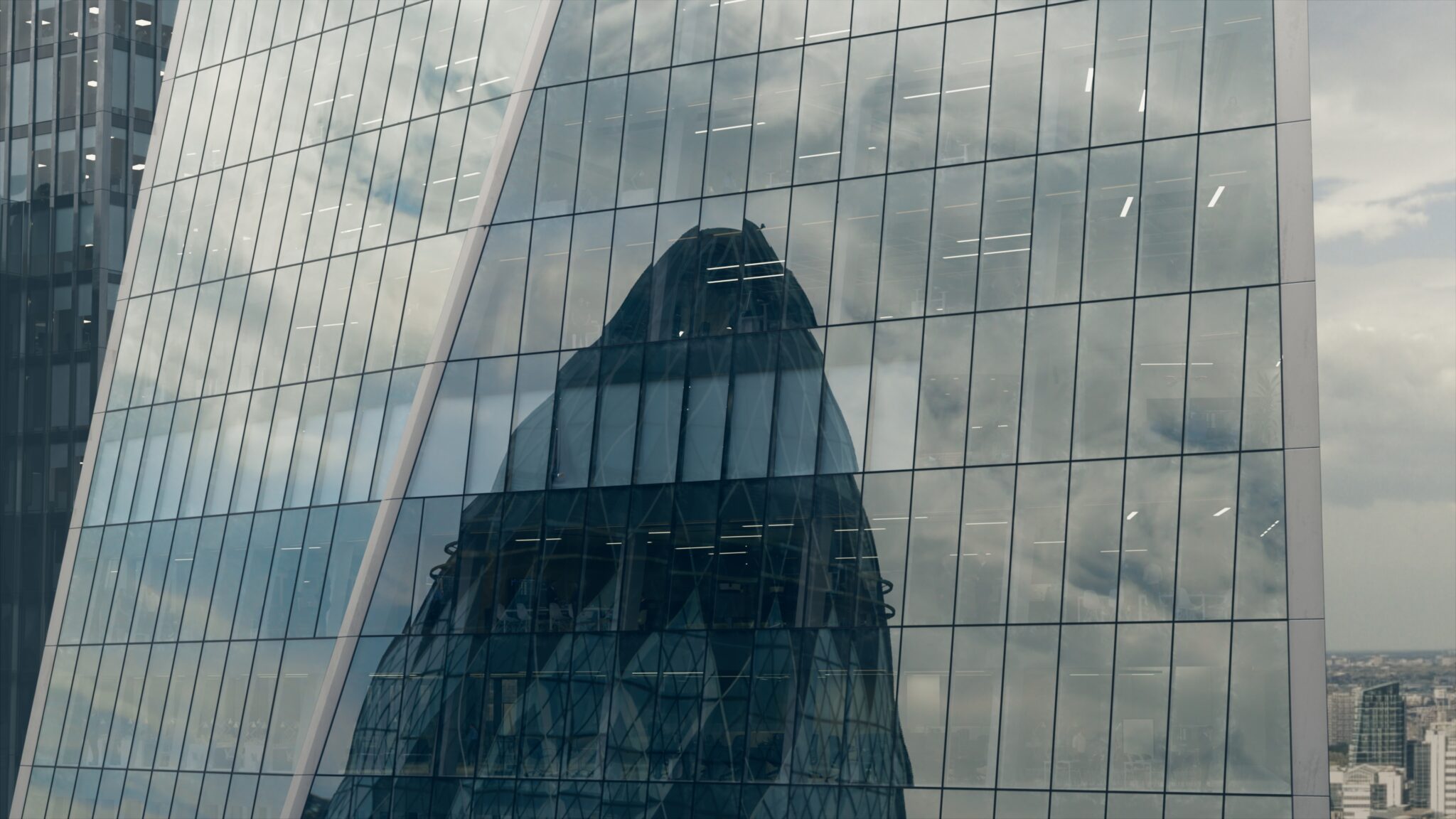
Once Midas knew the Scalpel shot would be 3D, they began to gather references. The art department provided them with floorplans, and they managed to use aerial plates to build photogrammetry of the building and surrounding area.
They then located the hero floor and used that as the base to build that section of the building complete with set dressing. With accurate reflection references for office windows the team then lined up their onset photo scans for higher resolution, as one can see from a nicely positioned Gherkin building in the reflection.
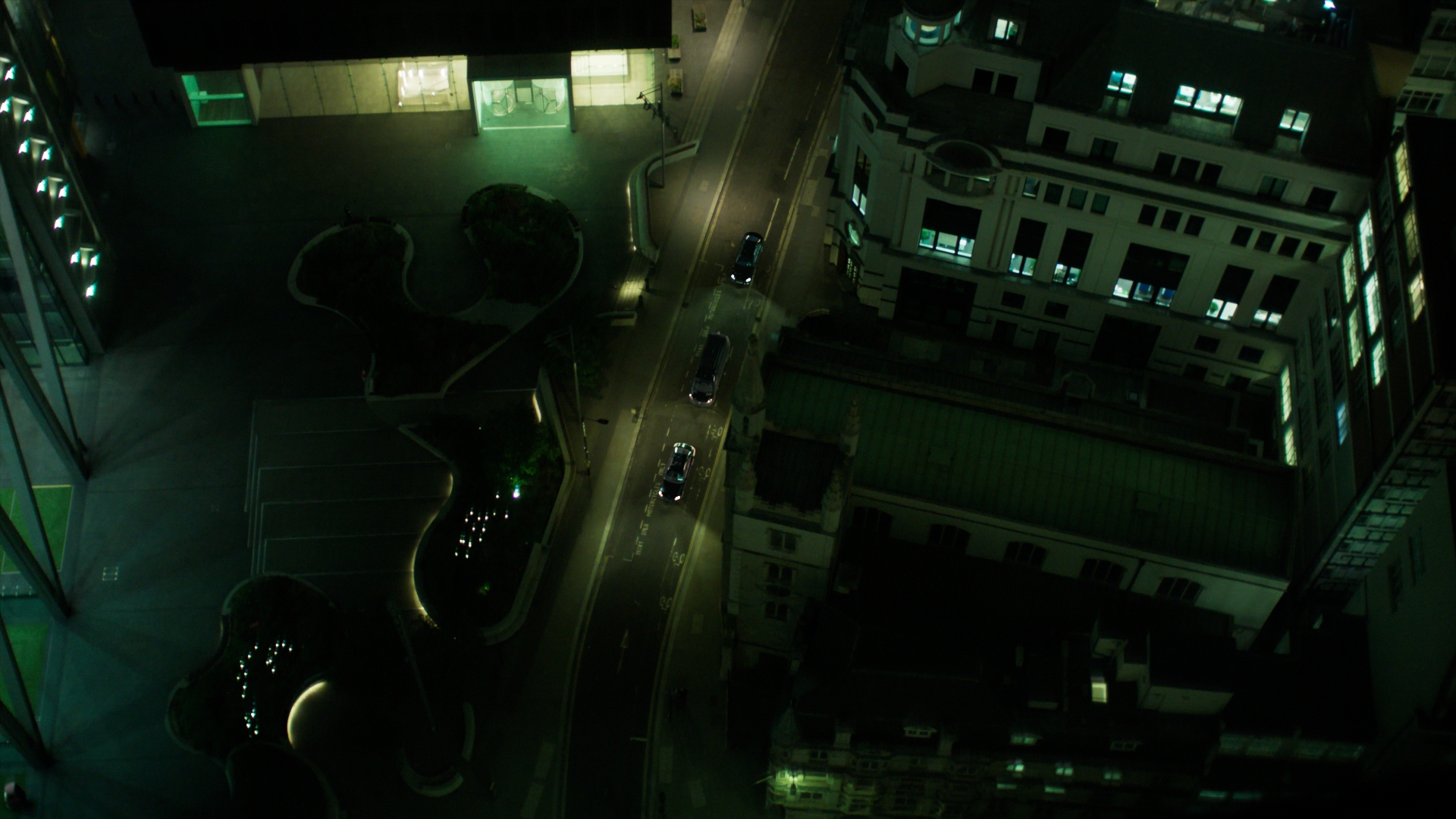
Some of the more unnoticed VFX came in the form of vehicles, such as MI5 cars approaching the Scalpel building in episode 6, and an aerial shot where the lockdown of Leadenhall street couldn’t be coordinated, so the team added CG police cars, officers and crowd. The crowd was generated using a large-scale simulation, whereas the police officers were animated with custom motion-capture performances.
Because of the physical nature of the scenes, select props were enhanced with CG to create safe yet convincing interactions with the actors, such as the screwdriver and syringe needle.
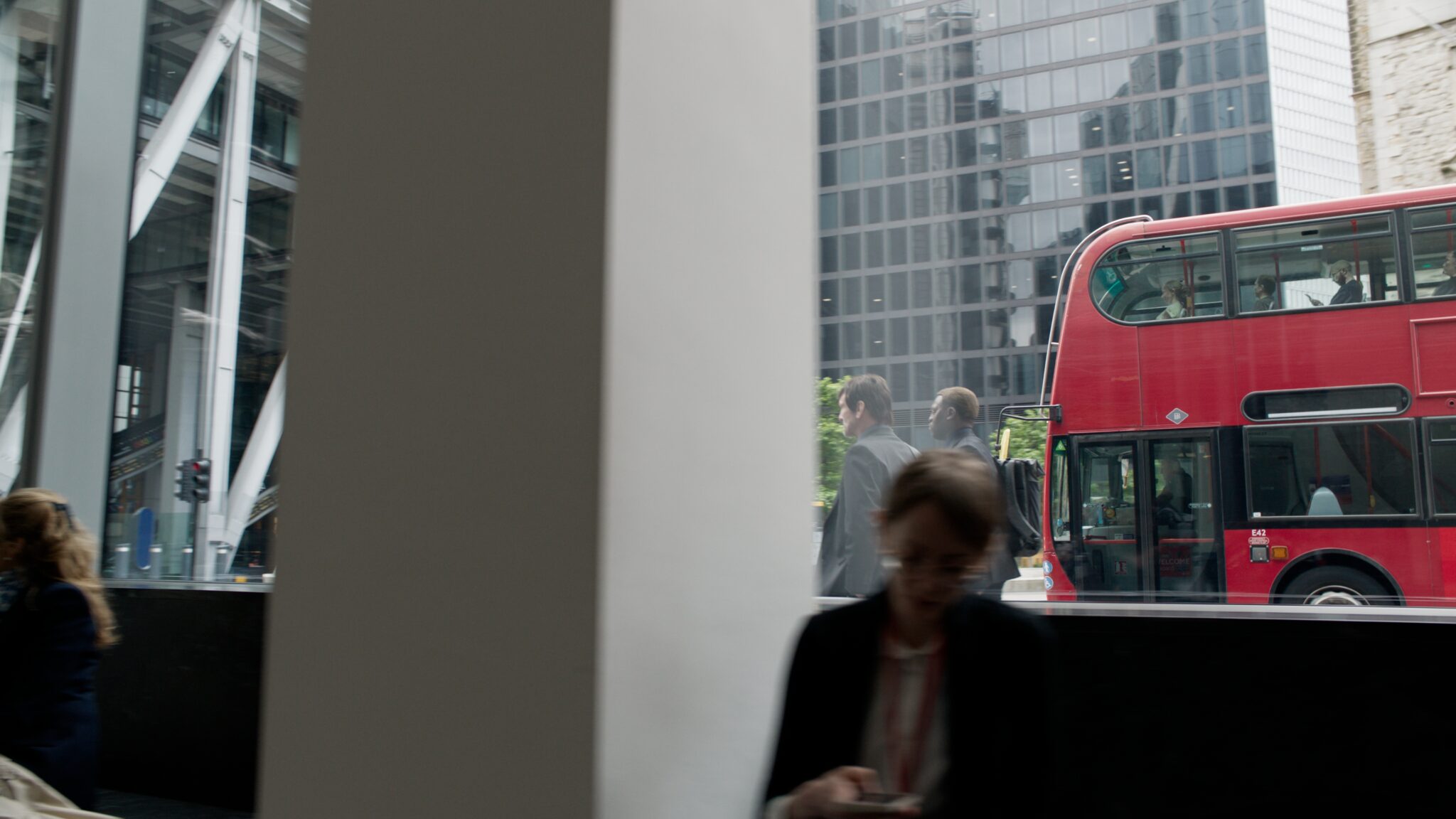
Additional CG was required to add passengers to the upper deck of a bus in the opening of episode one, helping sell the busy rush of London’s morning commute, as the perspective change was too severe for a 2D solution. The team scanned real people in their ‘commuter’ pose with some additional animation to add subtle movements.
Shootout
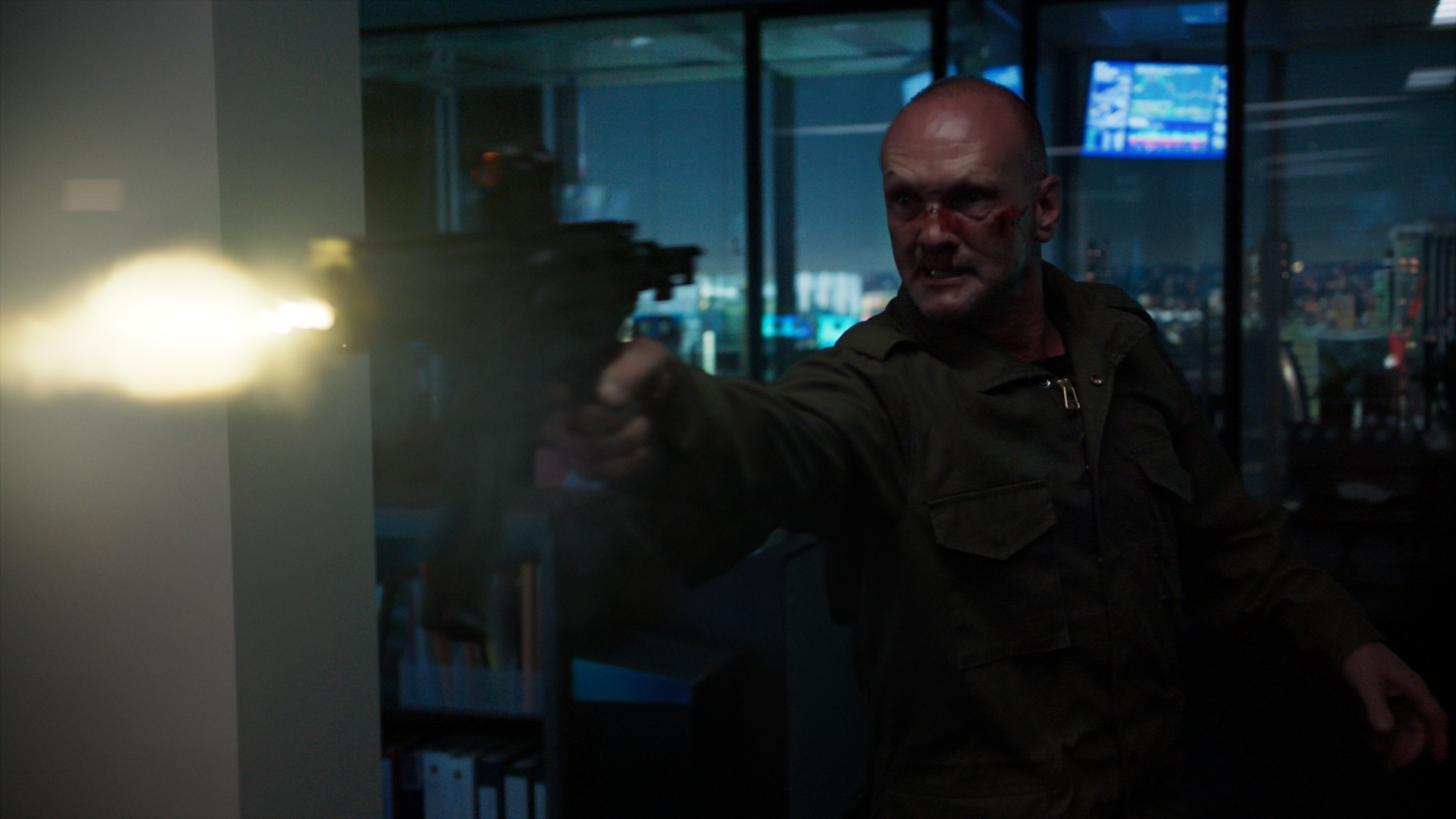
Shootouts, bullets, muzzle flashes and debris are all things that the VFX team are very familiar with at Midas and have employed on many shows.
Guns onset were using airsoft with synchronised LED lights hidden inside the barrels for extra interactive lighting flashes, which helped enormously in selling the effect. As well as this, the team had arranged a VFX element shoot for small debris and TV screen damage, where a combination of small charges and paintball guns were used to replicate bullet hits on the screens.
“Production brought a strong and consistent vision from beginning to end, making them a
pleasure to work with. They were clear and decisive from the start, including us from early
prep, making our involvement less reactive and more planning oriented. Overall, the VFX
was crafted to enhance a grounded, contemporary narrative set against London’s instantly
recognisable backdrop.”Sara El Jamghili, Head of Production at Midas VFX
See Midas VFX’s breakdown here:
All episodes of Steal are available now on Prime Video.