From de-ageing Bill Nighy to shaping psychological landscapes, Vine FX delivers for Prime Video thriller series
Based on an original story by New York Times best-selling author Harlan Coben and adapted by BAFTA winner Danny Brocklehurst, Lazarus blends psychological suspense with themes of grief, memory, and buried truths. The cast includes Sam Claflin, Bill Nighy, Kate Ashfield, Karla Crome, David, Fynn, Alexandra Roach, and more.
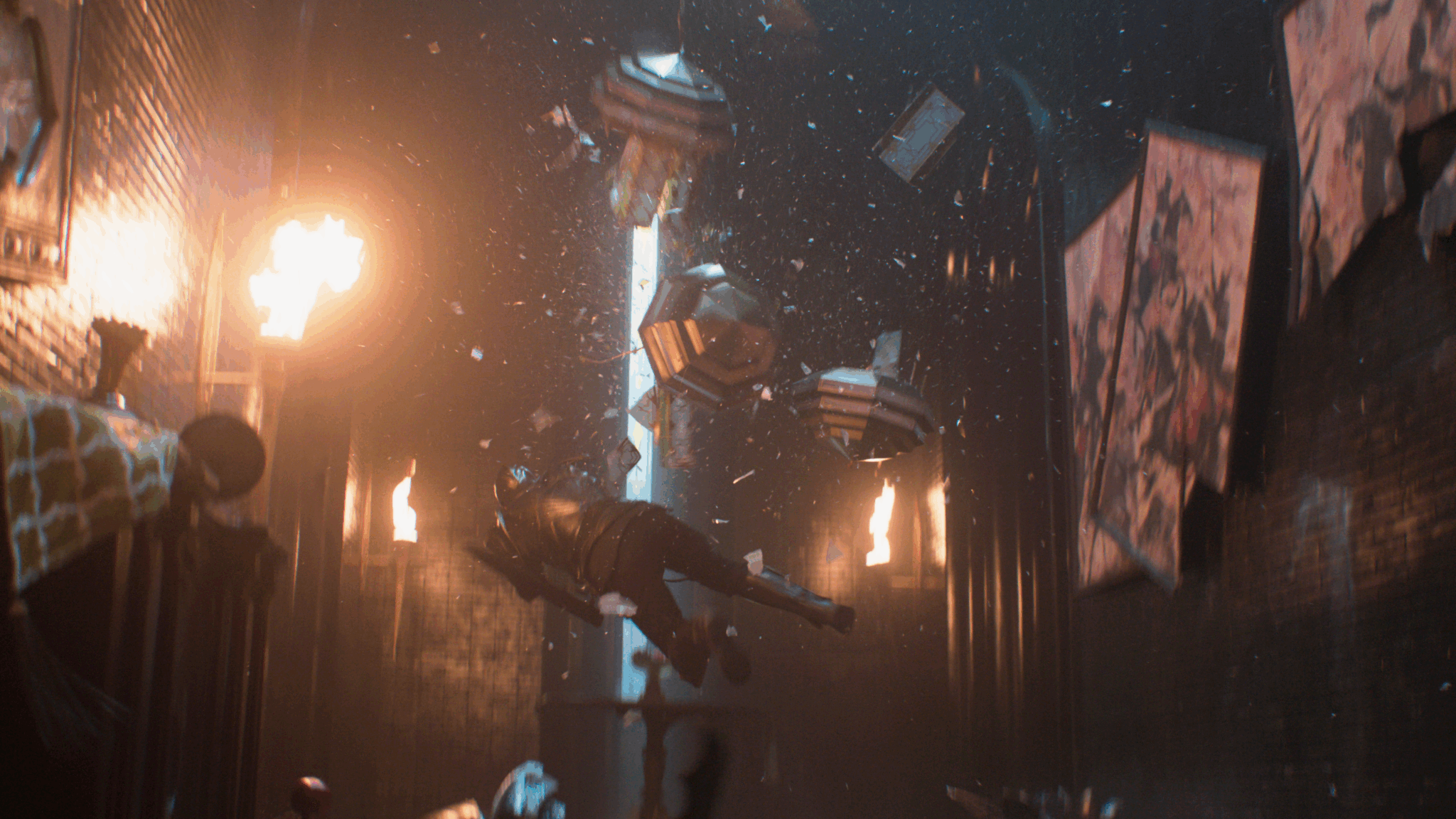
As sole VFX vendor, Vine FX was embedded in the creative process from the start of the project. Working closely with the Quay Street Productions and Prime Video teams and aligning with the show’s various directors, Vine FX delivered over 235 shots across 6 episodes.
As the story demanded a fusion of the past and present, a haunting exploration of generational trauma, woven within an intense web of psychological suspense. The VFX environment mandate was just as ambitious: to create a world with a consistent atmosphere and entirely indistinguishable visual effects. The Vine FX team was tasked with creating a visual language that felt slightly futuristic and neither overtly British nor rigidly North American, but evocative, moody, and international in tone.
“The clients wanted the environment to appeal to a broader audience and feel neither distinctly UK nor North American. Shooting in Manchester and Liverpool gave the show an urban backbone, but the team was asked to obfuscate location cues, insert extensions, and create variations in weather and lighting that emphasised claustrophobia, density, and tension.”
Kaitlyn Beattie, Executive VFX Producer
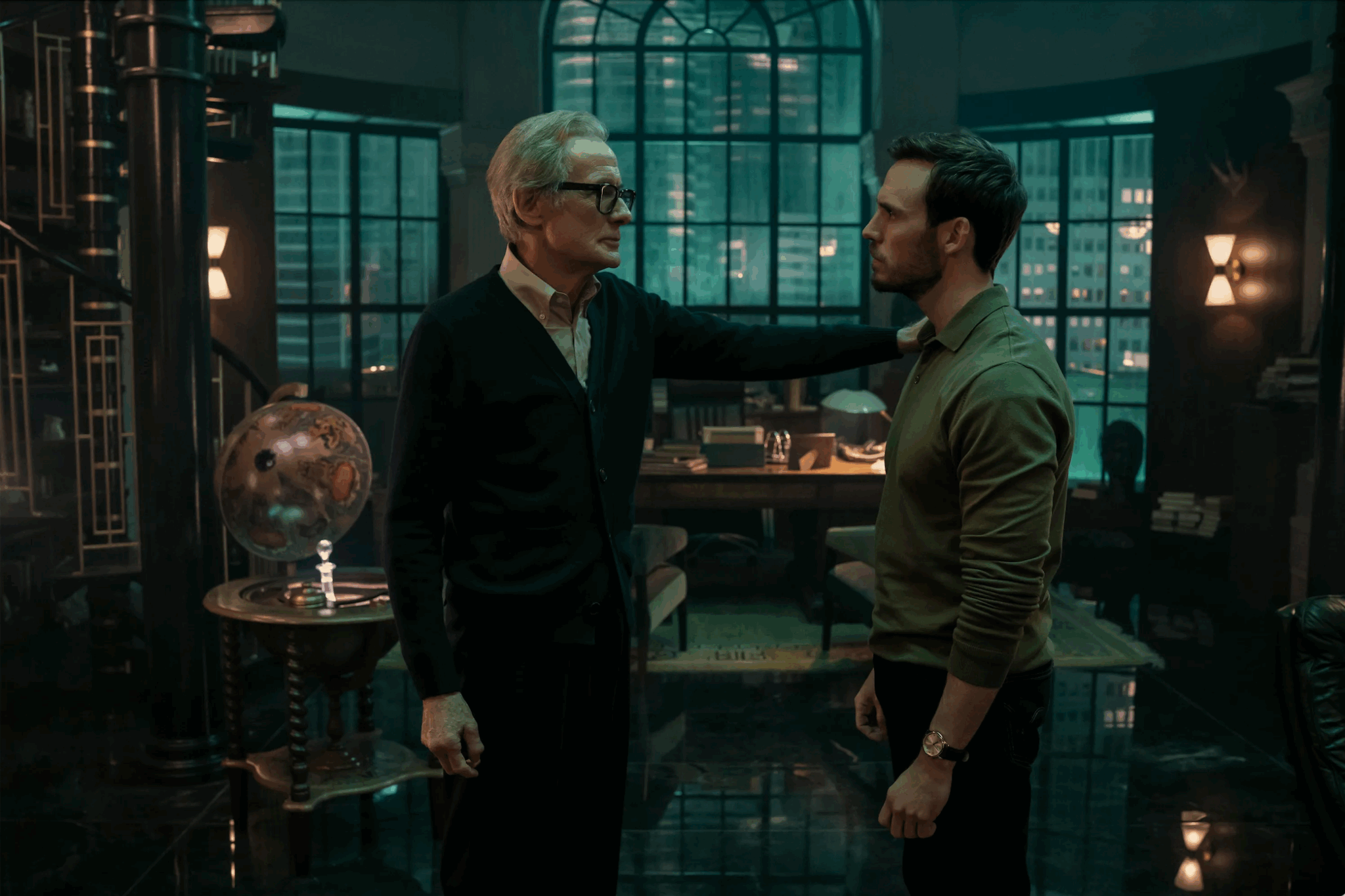
Led by Creative Director Simon Carr, the team were acutely aware of preserving high-profile actors’ identities, performances, and emotional nuance. The Vine FX team faced this challenge head-on with the de-ageing of Bill Nighy and Amanda Root, opting for a hybrid pipeline of cutting-edge CG, machine learning, and seamless compositing techniques to maintain the soul of the performances while reducing the years.
“Retaining Bill Nighy’s performance was key. Bill’s face presents a unique VFX challenge, it’s instantly recognisable and deeply expressive. Obviously the clients wanted a believable finish, so they didn’t want to change his glasses or hairstyle too drastically in the de-ageing process.”
Simon Carr, Creative Director

“It’s not pure CG, we always blend in original elements for subtlety, as performance preservation is paramount. We’re capturing minuscule performances, retaining tiny tics, little twitchy mannerisms, and micro-expressions. This is what makes de-ageing believable.”
Jake Newton, CG Lead.
The multi-pronged method was a clear winner. CG head construction for precise control over facial structure, lighting behaviour and machine learning models trained on synthetic face-pair datasets (young/old). This marked the team’s first full-CG de-ageing pipeline, and with it came a steep learning curve.
The team’s R&D Developer, Peter Noble, developed a domain-constrained de-ageing model
trained on thousands of facial images, specifically tuned for this project by biasing it toward older male facial features to reduce noise and computational overhead, drawing on research from L’Oréal and Disney. The team then finished with a compositing blend that retained original elements, helping to preserve delicate expressions. Facial capture was done using Unreal Engine’s Live Link Face App, supported by FACS (Facial Action Coding System) libraries to map plausible facial shapes. While effective, early outputs pushed the digital likeness too far.
Amanda Root’s role posed a different kind of challenge. Her brow furrow is key to her emotional delivery, and standard smoothing approaches threatened to erase that nuance. To address this, the team leaned heavily on CopyCat-based methods in Nuke, allowing compositors to make frame-specific adjustments that preserved expressive fidelity.
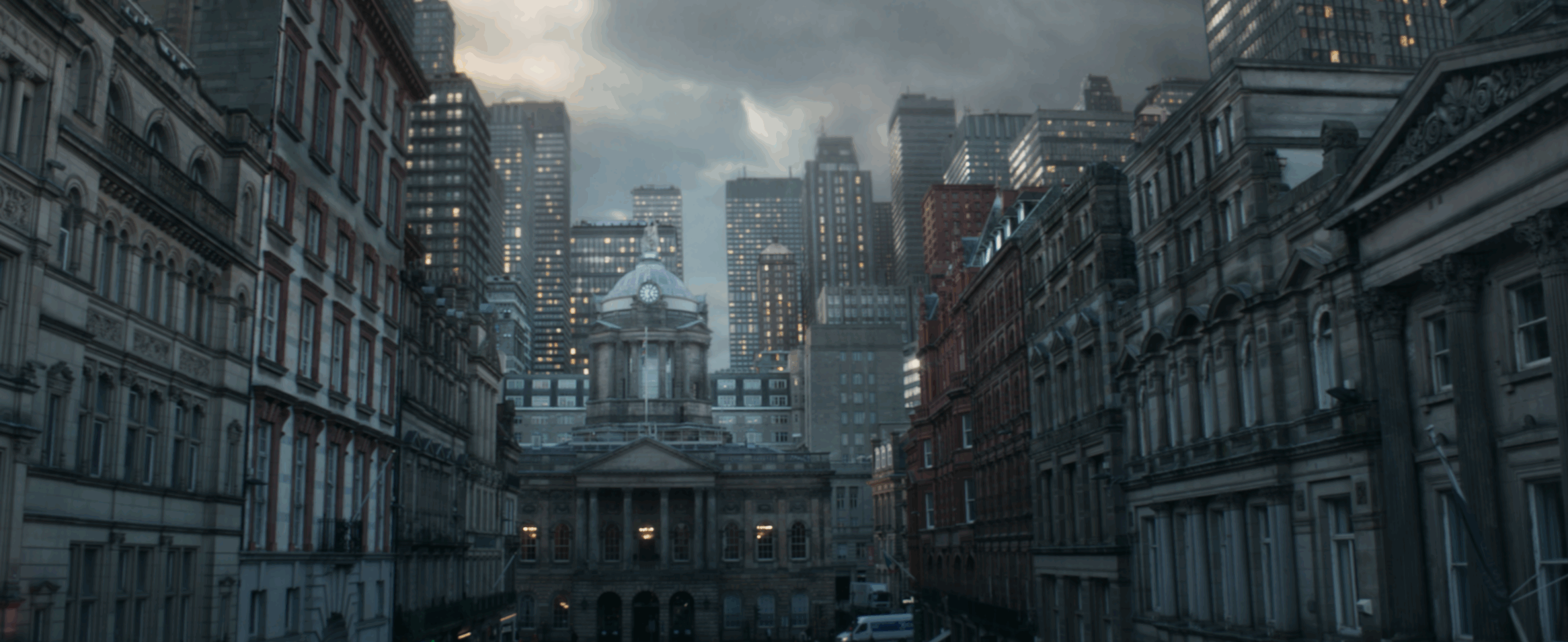
One of the show’s defining visual themes was urban compression, buildings crowding in, the sky nearly squeezed out, with rain and darkness pressing into almost every frame. Vine FX environment work played a central role in achieving this. A standout ‘hero shot’ began low on the street and gradually revealed a skyline of skyscrapers.
“Because the filming locations (Manchester and Liverpool) are so recognisable, the challenge was to create city extensions that felt believable yet geographically unplaceable. Selling scale was also tricky. We had to make buildings feel huge without relying on foreground placement. We used Google Maps and Earth to anchor CG buildings to real street layouts and ensure accurate proportions.”
Simon Carr
With three directors across six episodes, maintaining a consistent tone required careful coordination. The first block’s director, Wayne Yip, established the show’s visual language and internal world rules. Subsequent directors Nicole Volavka and Daniel O’Hara referenced this foundation as they developed their own scenes, but aligned with their own artistic flair, particularly in action or character-driven sequences.
Consistency was further supported by having a single VFX vendor across the entire production.
“We put together an excellent plan as a team and implemented structured systems to absorb the pressure. Frame.io annotation and client engagement also significantly reduced the time required for shot review. In the end, we actually delivered ahead of schedule.”
Kaitlyn Beattie
See Vine FX’s VFX breakdown reel for Lazarus:
All six episodes of Harlan Coben’s Lazarus are now available to watch on Prime Video.