An apprenticeship offers you the chance to learn and earn. They offer at least 12 months of training and apprentices spend 80% of their time doing the role in on-the-job training with an employer, and 20% of their time in formal learning with a training provider, college or university.
Please note that UK Screen Alliance does not offer apprenticeships, so please do not apply to us. You will need to contact employers in our sector to see if they are currently offering apprenticeships. The BBC and Sky also offer apprenticeships in post production.
For details of employer cash incentives for taking on apprentices and details of partnering with the BBC flexi-job agency, please scroll down.
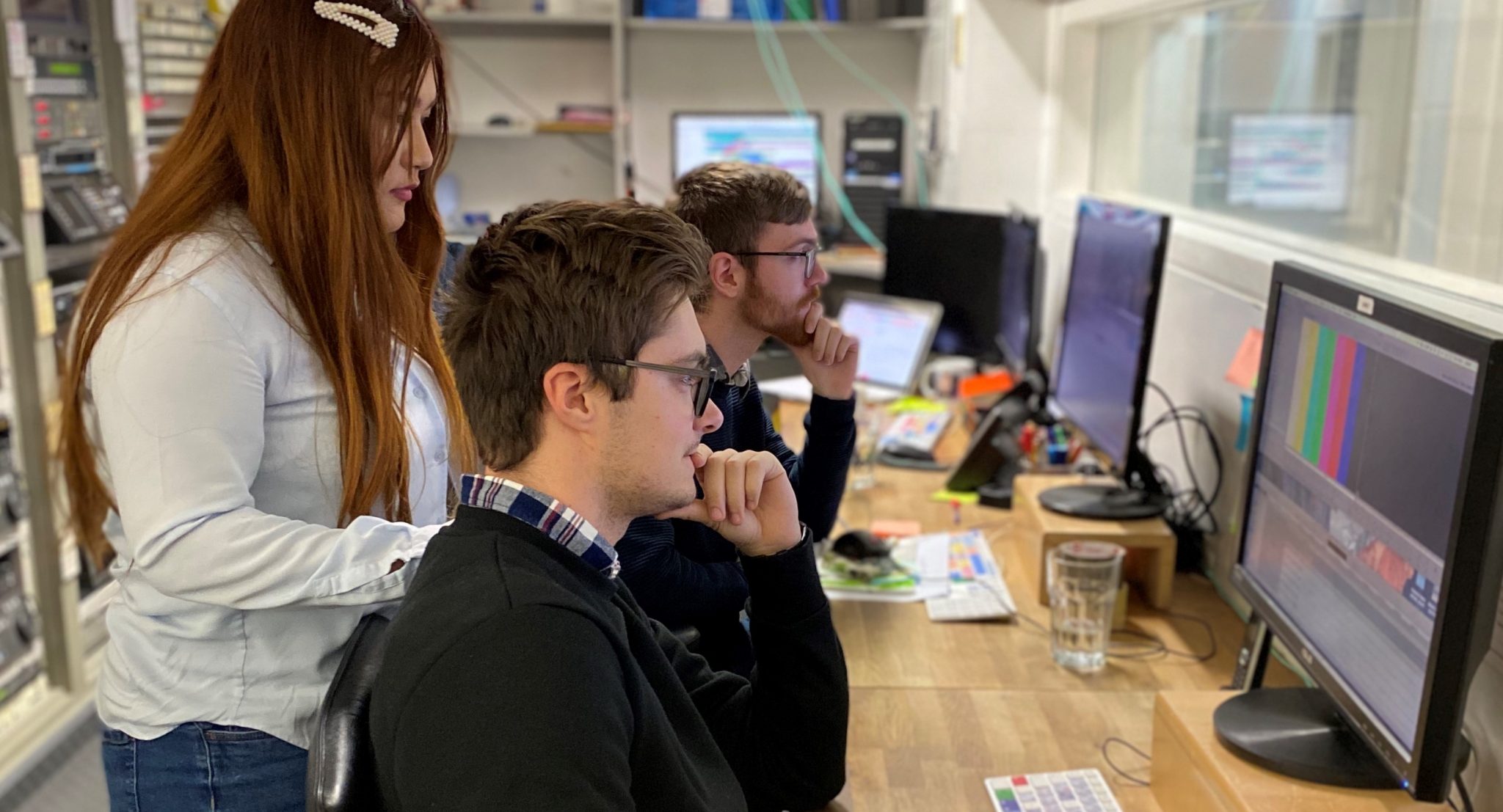
Apprenticeships are available at a variety of levels from GCSE equivalent to master degree. There is no upper age limit for who can be an apprentice and you can be an existing employee who is being up-skilled. Even if already have a degree, you can do an apprenticeship as long as it represents new learning.
If companies have a payroll larger than £3 million per year, they must pay the apprenticeship levy. They can draw on these levy payments to fund apprenticeship training. Non-levy paying employers can receive up to 95% of the training costs from the government, but from 1st August 2026, the need to contribute even 5% will be removed, allowing 100% subsidy for training and assesment costs for non-levy paying companies.
All apprenticeships courses in England have to be approved by the Skills England. The course outline is called a “standard” and groups of employer called “Trailblazers” work together to develop new standards.
List of apprenticeship standards directly relevant to film & TV
* From 1 January 2026, Level 7 apprenticeships will only be government-funded for apprentices who, at the start of their apprenticeship training, are either aged 16-21, or aged under 25 and have an Education, Health and Care (EHC) plan and/or have been, or are, in the care of their local authority. Any individual who started a level 7 apprenticeship before 1 January 2026 will continue to be funded through to completion.
DWP Incentives for employers
In 2026 a range of incentives payments for employers who offer apprenticeships were announced. The grants could be used to subsidise the apprentice’s wage. The incentives include…
- SMEs hiring apprentices under 25 will get a £2,000 grant from 1st October 2026
- Any company hiring a person under 25 who has been on Universal Credit for 6+ months gets £3,000 grant (stackable with SME incentive above)
- Company pays no employer NIC on apprentices under 25 (saves between £3,000 and £3,600 on payroll cost over employing a non apprentice on living wage)
- As of August 1st 2026, non-levy paying employers no longer need to fund 5% of the training cost for apprentices under 25. Government will fund 100%
Partnering with the BBC Flexi Job Apprenticeship Agency
The BBC is committed to supporting and developing talent for both the BBC, its partners, and the wider creative sector. They want to partner with independent production companies and post production companies in broadcast media. Employers will provide practical skills and experiences, the learning providers will deliver high-quality education and skill development, while the BBC will manage the apprenticeship scheme. This will not only contribute to the growth of the creative sector but also support individuals in starting their careers.
Benefits of the Flexi Job Scheme
- The BBC will pay up to 50% of the apprentice’s salary and on-costs.
- The BBC will manage the recruitment and work with the training provider to create a bespoke learning programme for the apprentice.
- The BBC will work flexibly with you to enable the apprenticeship to work with your production schedule.
- The BBC funds all training costs of the apprenticeship through its apprenticeship levy.
The BBC Apprenticeships team will:
- Manage the recruitment of the apprentices, hiring them on a fixed-term contract for the duration of the apprenticeship.
- Provide payroll and an end-to-end HR service.
- Offer access and disability services including pastoral support.
- Deliver a wrap-around learning programme including apprenticeship qualification and learning support and career employability master-classes.
- Partner with learning providers to deliver gold standard training programmes.
The host employer will:
- Provide an on-the-job industry placement that will allow apprentices to gain experience that will fulfil the requirements of their apprenticeship.
- Manage and support the apprentice day-to-day whilst they are on placement.
- Ensure the apprentice is treated as supernumerary to your team so they can learn from colleagues and gain as much knowledge as possible during their time with you.
- Allow time off for training and academy study.
- Provide feedback to the BBC Apprenticeship Team and Learning Provider on how the apprentice is progressing.
- Offer networking opportunities to the apprentice where appropriate.
If you are an independent production company or a post production company who are interested in taking on an apprentice through the BBC Flexi-Job Apprenticeship Agency, further details are available here, including an Expression of Interest form.